
Breed DRX 33a
Devon Rex
breed description
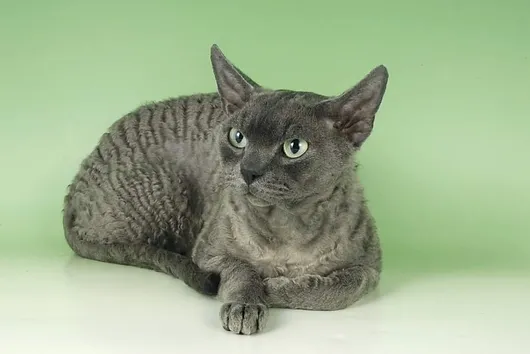
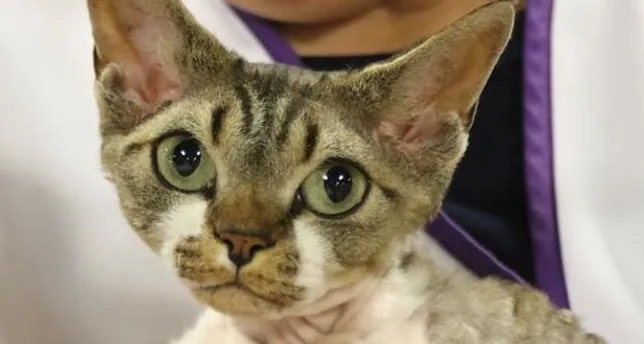
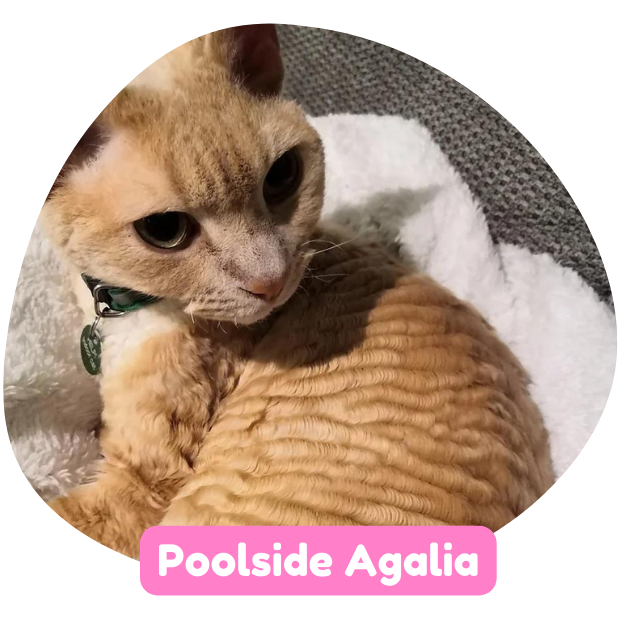
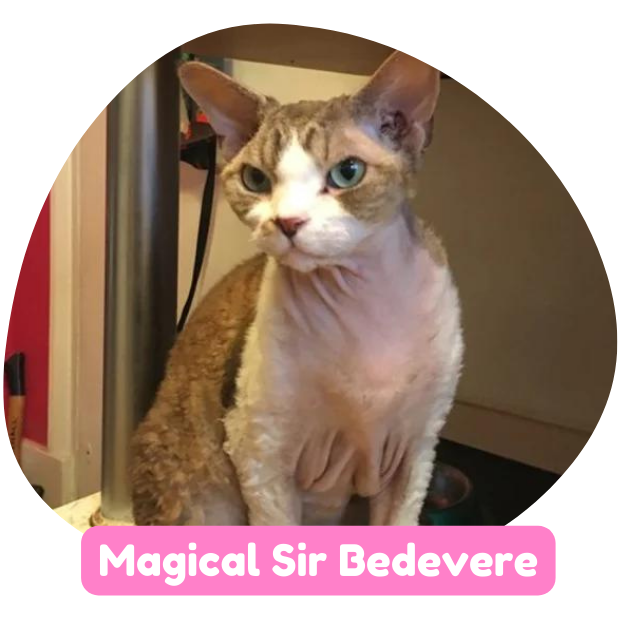
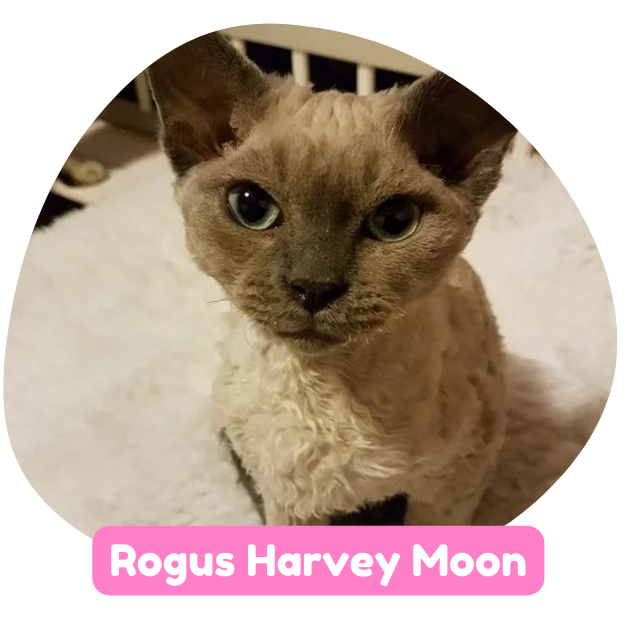
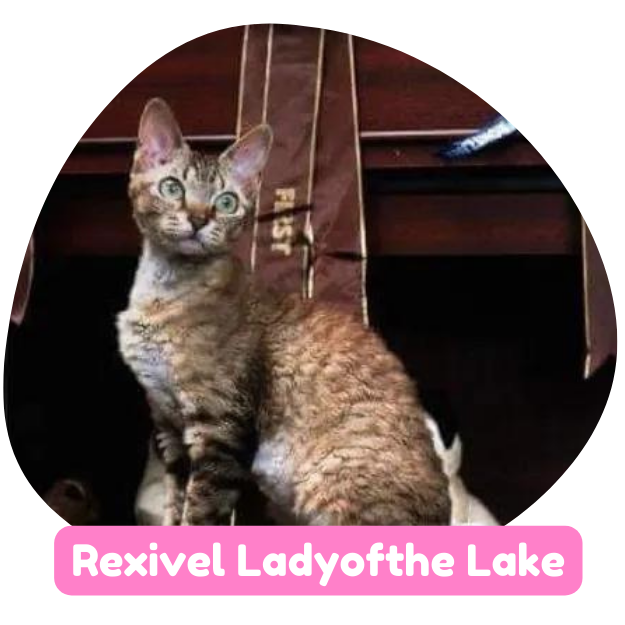
The Devon Rex is a breed like no other. It’s often called the “pixie” of the Cat Fancy, with a short, broad wedge shaped head, which is flat between large well spaced ears, set wide at the base, and low on the head. They have high cheekbones, oval-shaped, eyes – which can be any colour – with what is usually described as an ‘impish’ expression. They have prominent whisker pads, a defined “stop” in profile and normally crinkly, short whiskers and eyebrows – which can sometimes feel stubbly.
Their slender neck leads to a muscular body of medium length, with a broad chest, and they look almost as though they are standing on tiptoes with slim legs and small oval paws. The tail should be long and tapering. The coat – waved or rippled, should be short, dense and soft to the touch, with an even length that covers the whole body. The coat on the head and neck, over the shoulders, and on the legs and paws is sometimes a little short to be waved.
The Devon Rex has three types of hair: guard hair, awn hair, and down hair; the Devon Rex coat is unusual because there is very little guard hair. In fact – when showing a Devon Rex – guard hairs are considered a fault. All colours and patterns are recognised. The coat may vary over the life of the cat; kittens may drop their coat during development and adult coats can change seasonally. The coat looks its best at full maturity, from 18 months of age onwards.
Devons are muscular cats, weighing 6-9lbs, with the males being larger than the females. They are low maintenance with their wavy coats needing just a light hand groom, or occasional brush.
health
Devon Rex are generally a very healthy breed, but the limited gene pool in the past led to the development of an inherited muscle disease called Devon Rex myopathy or spasticity. This is a recessive gene trait meaning a cat can be: affected (has two copies of the abnormal gene), a carrier (with one abnormal gene so does not suffer, but can pass the faulty gene on) or clear (with no copies of the mutated gene). A DNA test is readily available, and no cats registered with the GCCF can be part of a breeding programme without a clear test – so getting a kitten from a breeder who screens their breeding stock will ensure your cat will not be affected. Cases of CMS are rare today.
The lifespan of the Devon Rex is 10–15 years, but most will live into their mid to late teens.
Their ear shape can mean they get a little mucky at times – so regular cleaning is a must. Cats with paler coat colours who have outside access may require sun block on their ears in the summer months.
Temperament
Although not a large breed, the Devon Rex has a massive personality. They are extremely playful, active, and fun loving — and will keep you amused with their antics. They are inquisitive and interested in everything around them, so can get into mischief, especially if left alone for long periods when they can get bored.
A word of caution, they can be greedy and inclined to steal the food from other pets – or even off your dinner plate! They are very agile jumpers so will easily access the top of kitchen cupboards or doors.
Devons are super intelligent and can be taught tricks and enjoy playtimes with their human or feline companions. Extremely people orientated, they enjoy being part of the human family and love nothing better than to be on a lap or cuddled under your duvet at night. They do best in an active household with plenty of company — they’re great with children and happy to share their home with other family pets.
Be aware that mischievousness is all part of the Devon charm!
breeding devon rex
The Joint Rex Breed Advisory Committee
Breeds which have been approved for use in outcrossing are: Abyssinian, Asian Shorthair, British Shorthair, Burmese, Korat & Thai. In addition, European Shorthair are permitted in the pedigrees of imported cats. All other breeds are listed as non-approved.
Note: Cats on the Genetic Register are not suitable to use for outcrossing.
Devon Rex which have within the preceding five generations only Devon Rex only Devon Rex, Devon Rex Variants, Abyssinian, Asian Shorthair, British Shorthair, Burmese or Korat. In addition, European Shorthair are permitted in the pedigrees of imported cats. (See Reference Register Note 4 for information on the possibility of a change from the Reference to Supplementary Register when a cat of good breed phenotype is an adult.)
1. Devon Rex Variants which have within the preceding five generations only Devon Rex, Devon Rex Variants, Abyssinian, Asian Shorthair, British Shorthair or Korat & Thai shall be registered on the Reference Register with a Devon Rex Variant breed number. In addition, European Shorthair are permitted in the pedigrees of imported cats.
2. Devon Rex and Devon Rex variants which have within the preceding five generations any non-approved breeds, including non-pedigree cats, shall be registered on the Reference Register.
NB When kittens with one or both parents registered on the Reference Register are, under this Registration Policy, eligible to be registered on the Supplementary Register it is recommended that the person registering these kittens requests such registration and encloses documentary evidence of the five generations required. If this is not done the kittens may be registered on the Reference Register.
3. Normal coated cats produced from variant x variant matings will have no breed number only colour description and will be over-stamped 'may carry the Devon Rex gene'. Unless proven by DNA test to carry the DRX gene. If proven by test to carry the gene they are Devon Rex variants.
4. All cats resulting from matings between Devon Rex and any other rex coated breed will have no breed number and will be over-stamped 'not recommended for breeding’. Their progeny will remain permanently on the reference register’.
5. Any cats of Devon Rex appearance, either Rex or normal coated, with Sphynx ancestry will be registered on the Reference Register and be over-stamped 'must not be used for Devon Rex breeding'. No progeny will ever be recognised or registered as Devon Rex or Devon Rex Variants.
5. All cats resulting from matings between Devon Rex and any longhaired breed will be overstamped 'carries the longhair gene'. Their progeny will be overstamped 'may carry the longhair gene'. Unless a vet certified DNA test demonstrates that a cat does not carry any of the Long Hair genes.
NOTE 1: Congenital Myasthenic Syndrome (CMS) (Previously referred to as Muscular Dystrophy, Myopathy or Spasticity)
Devon Rex and Devon Rex Variants may be registered on the Active Register with effect from 5.10.2016 only if they have themselves been genetically tested as normal for the CMS gene, or their parents have been tested normal, or cats on every pedigree line in previous generations have tested normal. Pedigree line means both parents and four grandparents, eight great-grandparents, sixteen great-greatgrandparents and so on, or any combination of the same which is inclusive of both the sire's and dam's ancestors.
Devon Rex and Devon Rex Variants which have not been genetically tested or which have been genetically tested as carriers of this gene shall be registered on the Non-Active Register or the Genetic Register. Any such cats which are already registered on the Active Register shall be moved to the Genetic Register. Offspring of cats registered on the Genetic Register may only be registered on the Active Register if they have themselves been genetically tested as normal for this gene. All other offspring of cats registered on the Genetic Register shall be registered on the Non-Active Register or the Genetic Register.
NOTE 2: In accordance with GCCF Rules, Section 1, rule 1g, before the registration of any white Devon Rex or white Devon Rex Variant, on the active register a BAER or OAE certificate of freedom from deafness for the cat to be registered must be supplied to the GCCF. For identification purposes cats must be micro chipped prior to testing.
NOTE 3: All DNA samples for testing with the results to be submitted in support of registrations must be taken and certified by a vet. For identification purposes cats must be microchipped prior to testing and the number clearly shown on all documentation and the cat’s own veterinary record.
NOTE 4: In accordance with GCCF Rules, Section 1, rule 12c ii, the Devon Rex Registration policy stipulates that cats (and their progeny) with registered parents who conform sufficiently to the breed phenotype, as defined by the Standard of Points, may be re-allocated to the Supplementary Register from the Reference Register and so be eligible for competition in GCCF shows. The opinion of at least three Full Judges of the breed would be required in support from occasions when the cat is shown as an adult in exhibition with critique classes.
Our Cats

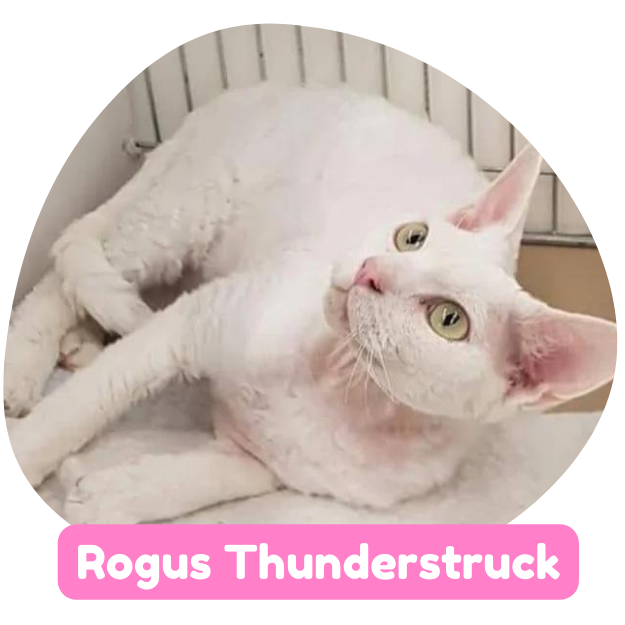

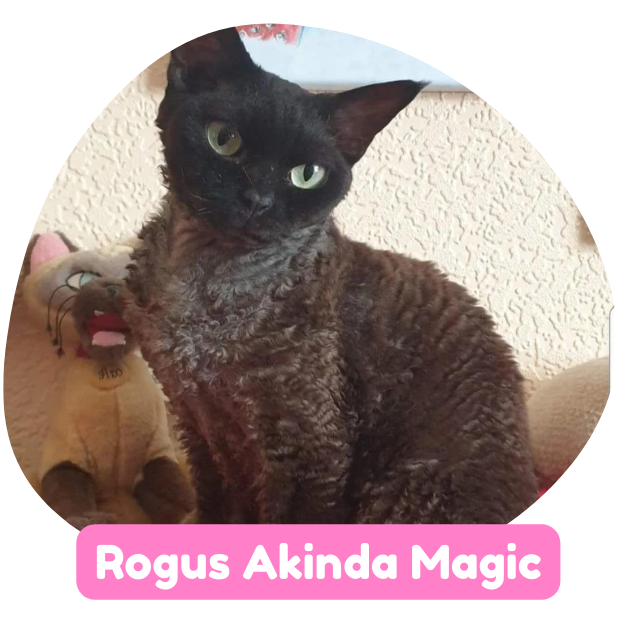
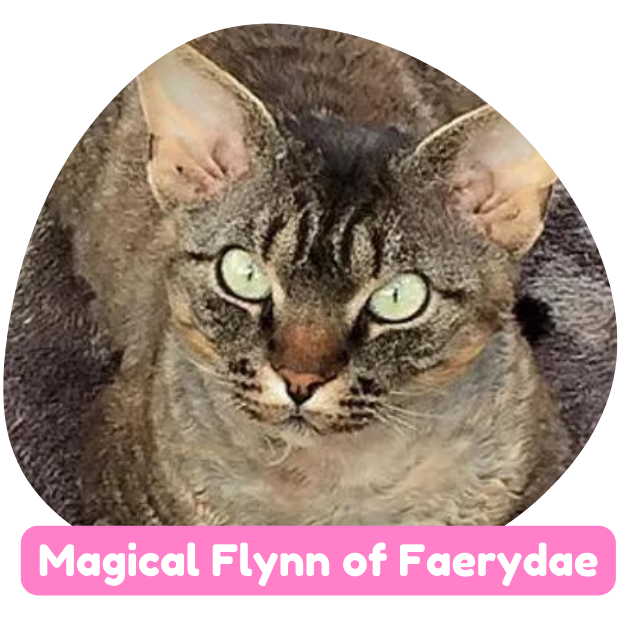
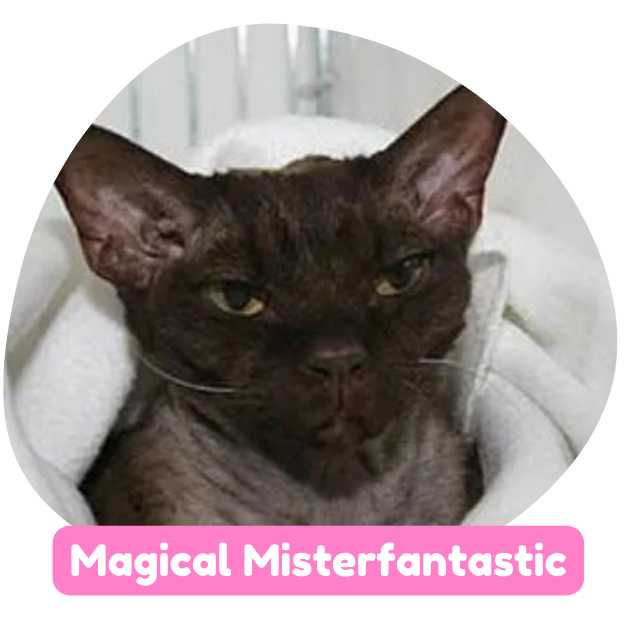

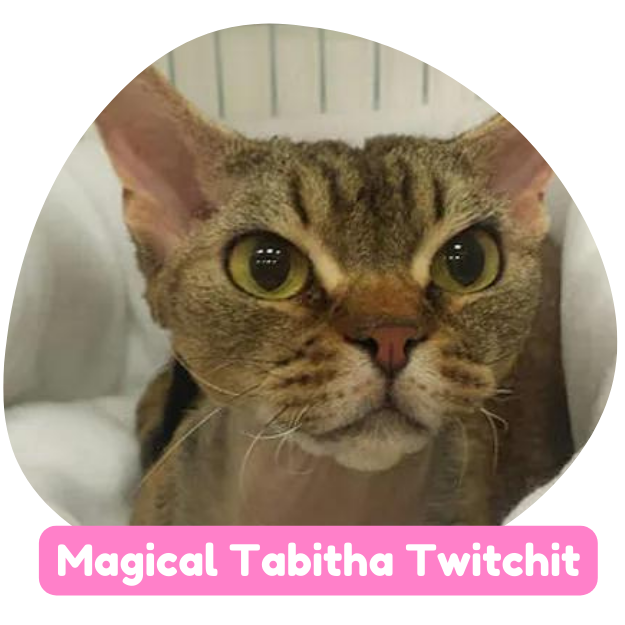
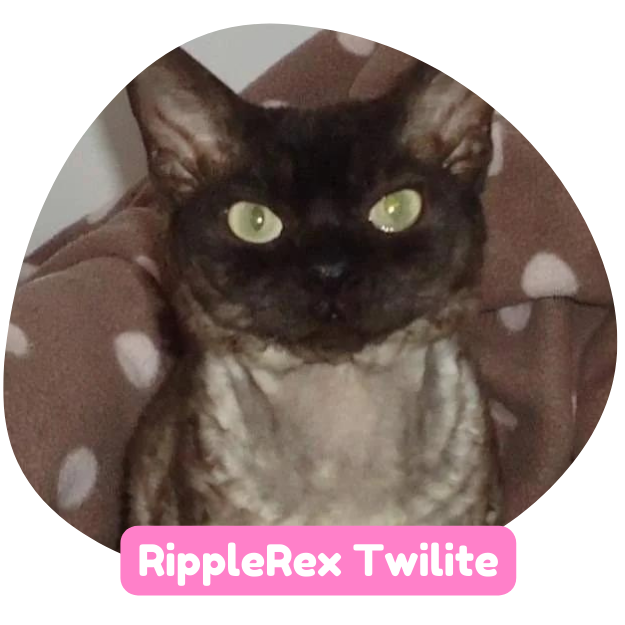
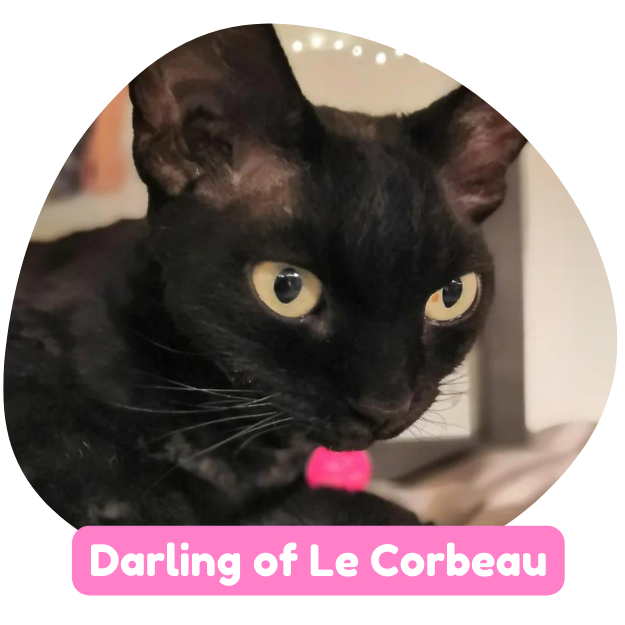
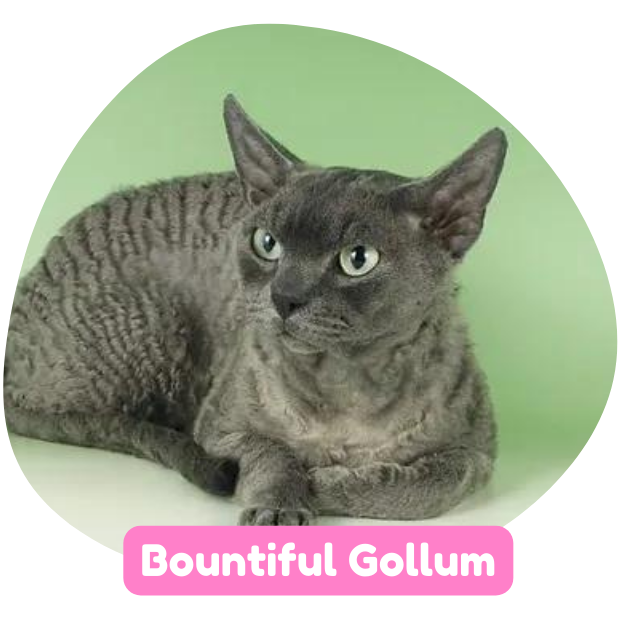
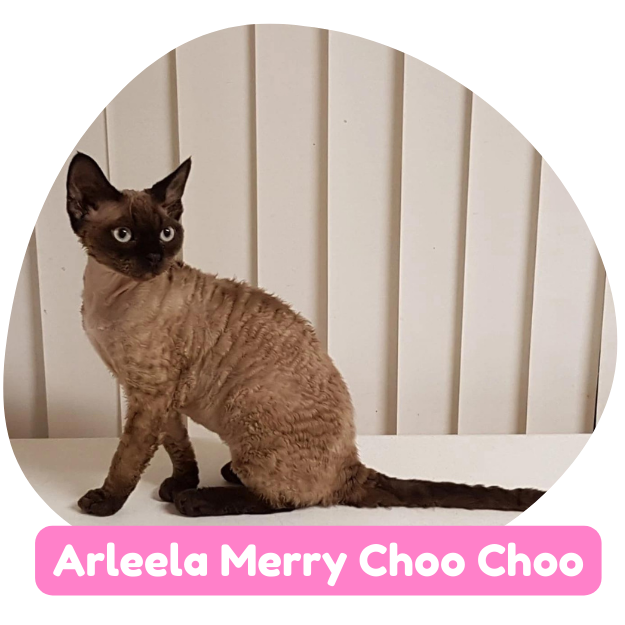
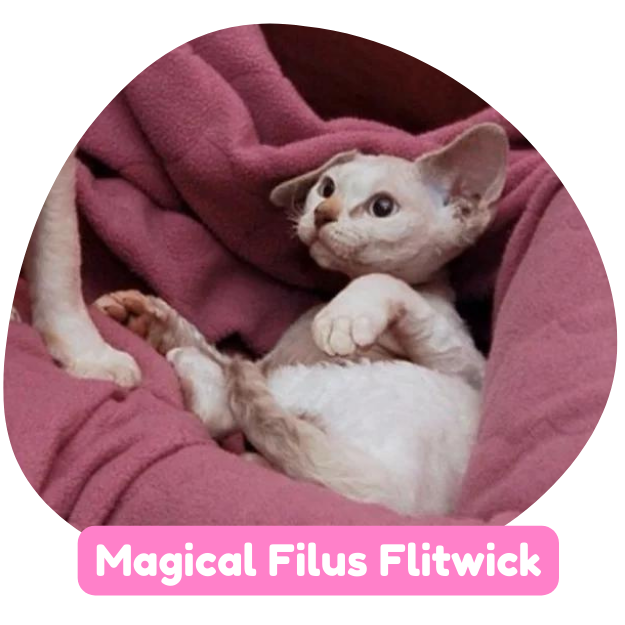
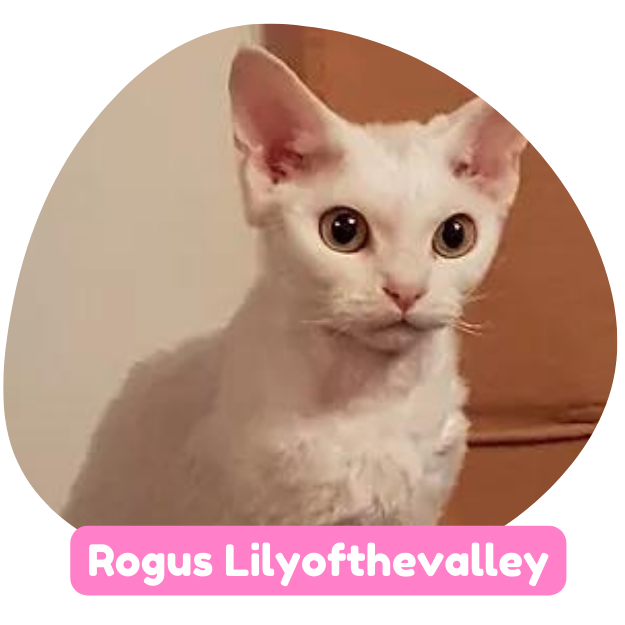


Devon Rex which have within the preceding three generations only Devon Rex. and in the fourth and Fifth generations only Devon Rex, Devon Rex Variants, Abyssinian, Asian Shorthair, British Shorthair, Burmese or Korat & Thai.
In addition, European Shorthair are permitted in the pedigrees of imported cats.