
Owning a Rex: a Guide for Prospective Owners
So, you want to be owned by a Rex?
What can you expect from these charming creatures?
All four breeds are exceptionally loving, and real ‘people’ cats, so do not think of buying one unless you are able to give it lots of love, care and attention. If you need to be out of the house for any length of time, then consider buying a pair of kittens, as loneliness and boredom is most unacceptable to Rex cats, and could lead to problems in the long run.
What is the difference between the breeds? Well, having asked breeders they have said that, in general, the Cornish Rex and LaPerm are not quite as naughty as the Devon Rex, but there are differing opinions on this! The Selkirk Rex is the largest of the Rex breeds and probably the most laid back.
What all agree is that they are definitely not cats that will sit prettily and be content to just be decorative.
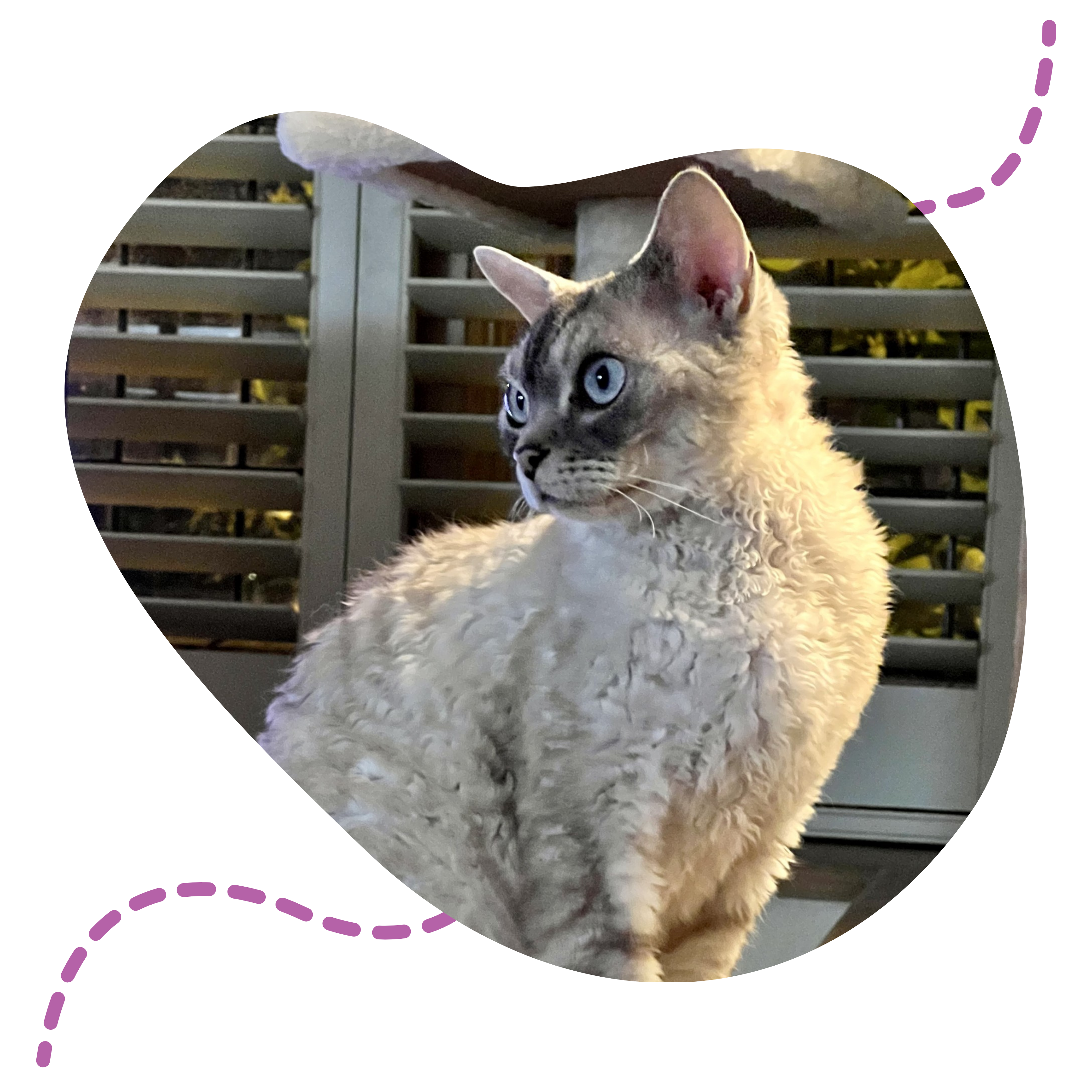
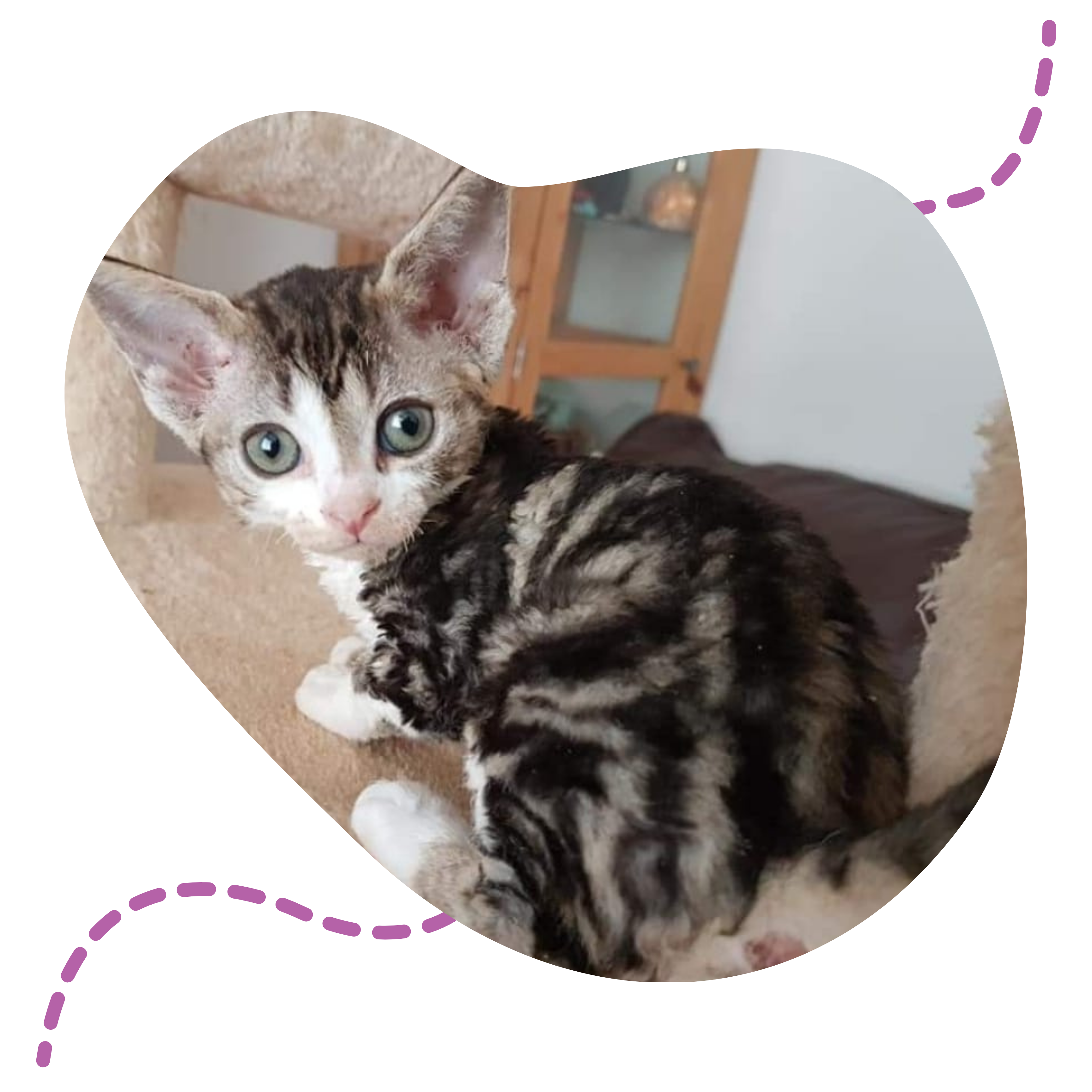
YOU HAVE BEEN WARNED!
What are you looking for in your kitten?
It will depend on whether you want to show and/or breed from your chosen kitten as to the ‘typiness’ of the cat you purchase. The price you pay may reflect this. Some breeders will be happy to see a kitten go to a good ‘pet’ home for slightly less than for a kitten of show or breeding quality. However, there can never be any guarantee that a kitten will turn out to be a show-winner or prolific breeder, so you must want the kitten for its own sake regardless of its future potential.
The full Standard of Points for all the breeds is available on our site but it is always a good idea to research and go to a show. See what type of Rex gets placed highest within its class to give you an idea of what you should look for.
Ensure the kitten you are buying is registered on the GCCF register before taking it from the breeder.
The price you pay will include the cost of vaccinations and registration, and will also contribute to the breeder’s costs of rearing and caring for the litter. It is sensible to ask the breeder for an approximate cost when making your inquiry so that you can consider this before visiting to avoid disappointment all around.
our checklist
Kittens will be ready to leave twelve to fourteen weeks old
The Rex Cat Association members recognise their responsibility as breeders and lovers of these fascinating creatures and will take great care to ensure that their kittens are happy, healthy, house-trained and ready to leave the litter.
Questions
You will be expected to answer a lot of questions from the breeder, who will want to ensure their kittens all go to permanent, caring and well prepared homes.
vet
You will need to have found a good veterinary surgeon nearby in case of any emergencies and be able to assure the breeder that you can afford any costs which may be incurred.
be prepared
You will have prepared your home for a new kitten, ensuring that a safe, warm sleeping area is available. (Note: Rexes tend to find a human bed to share!)
visiting
The breeder will invite you to visit to see the kittens. This is your opportunity to ask questions, seek advice and information and see the cat's behaviour.
be sure
DO NOT buy a kitten if you are not TOTALLY sure that it is what you want or can cope with. Breeders will be much happier with your honestly than the kitten being returned at a later date.
going home
If the breeder is satisfied you will make a good Rex owner, you will be given clear instructions on taking your kitten home, for which you must prepare carefully. A strong purpose-made carrier is essential.
contact
The breeder will want to keep in touch with you, and it is always appreciated they're kept updated. Our members will ALWAYS agree to help out, and, if necessary, take back the cat themselves for rehoming.
home
Try to take your kitten home at the weekend, or when you are on holiday when you will have plenty of time to help your kitten settle in. If you have any other pets & children, make sure they do not startle the kitten.
some extra advice
going home with your rex
Getting a kitten for Christmas or for a young person’s birthday is not always a good idea as both are busy and hectic times and you may not be able to give your kitten the necessary care and attention it requires during this period.
Once you have your kitten home, you must ensure that it is kept warm. The Rex breed dislike cold and will seek out somewhere with heat, and not always in the safest place, so a cosy bed of their own is a must.
If your cat is going to be kept indoors they also appreciate a clean tray, so you need to regularly remove soiled litter. Likewise for bowls and dishes.
Food is rarely left, so it is a good idea to wash bowls immediately after use. However some like to pick throughout the day so if you are using dried food, the quality foods are the best, (cheap is not a good option), do make sure there is fresh water freely available.
FAQ
Frequently Ask Questions
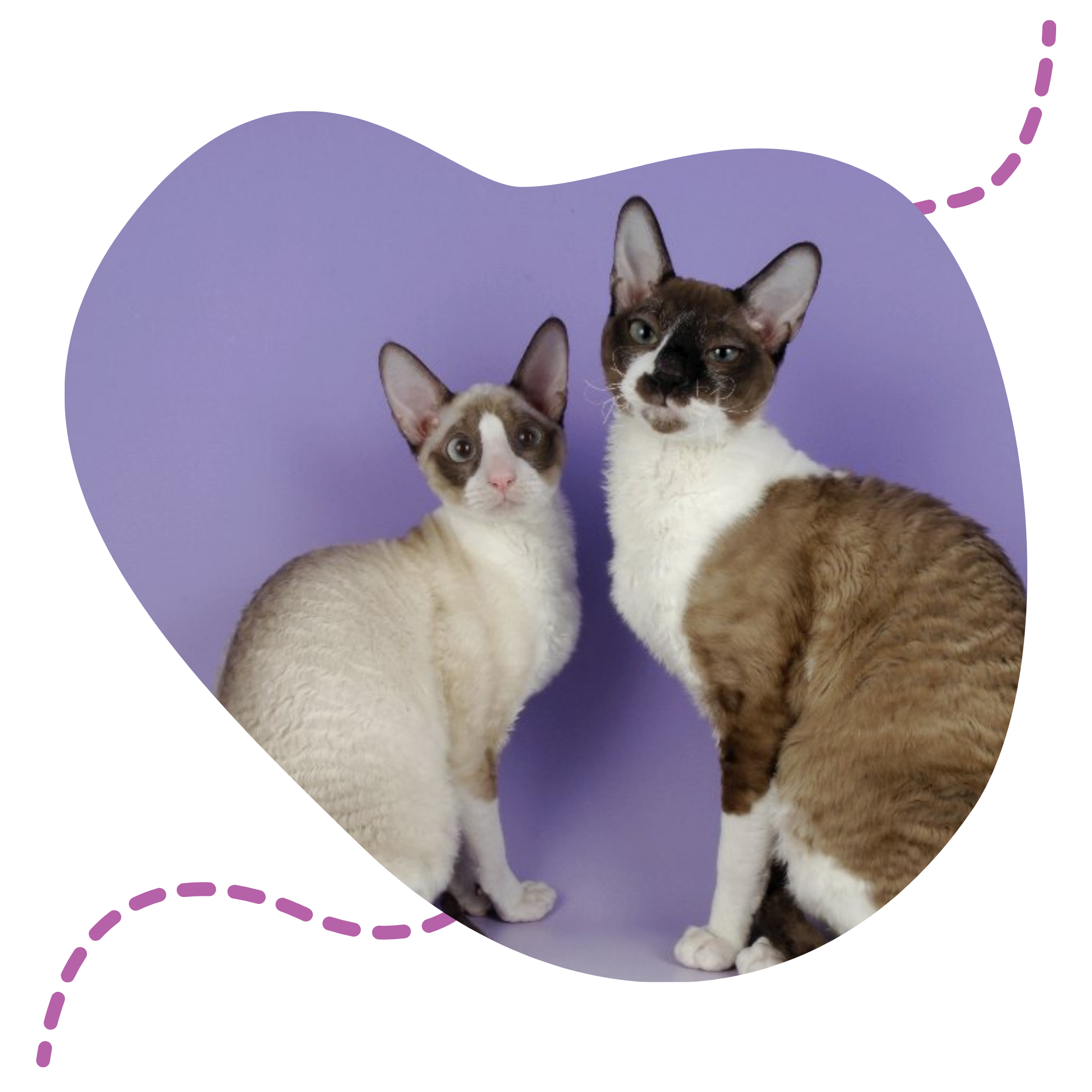
The Rex Cat Association recognises four distinct breeds: the Cornish Rex, Devon Rex, Selkirk Rex, and LaPerm. Each breed has its own unique characteristics, from coat type to personality, making them all special in their own way.
Choosing the right Rex breed depends on your lifestyle and preferences. Consider factors such as the breed's activity level, grooming needs, and temperament. Research each breed thoroughly and speak with breeders to understand which Rex might be the best fit for you.
Rex cats are often considered more suitable for people with allergies because they have less shedding and different coat textures compared to other breeds. However, no cat breed is completely hypoallergenic. It’s best to spend time with a Rex cat before deciding to see how you react.
Rex cats are known for their playful, affectionate, and intelligent nature. Be prepared for an active and curious companion who enjoys being part of the family. Ensure you have plenty of interactive toys, scratching posts, and cozy spaces for them to relax.
Finding a reputable breeder is crucial for ensuring the health and well-being of your future pet. The Rex Cat Association maintains a list of approved breeders who follow responsible breeding practices. Always ask for health certifications, visit the breeder in person if possible, and ensure they provide proper care for their cats.
While Rex cats are generally healthy, each breed may have specific health concerns. For example, Cornish Rex and Devon Rex cats can be prone to genetic conditions like hypertrophic cardiomyopathy (HCM). Regular veterinary check-ups and a healthy diet are essential for preventing and managing any potential issues.
Introducing a Rex cat to other pets should be done gradually. Start by allowing them to become familiar with each other’s scents before any face-to-face meetings. Supervise initial interactions and ensure that your Rex cat has a safe space to retreat to if needed. Patience and slow introductions will help foster positive relationships between pets.
Yes, Rex cats are generally very good with children. They are known for their friendly and playful nature, making them great companions for kids. However, it’s important to teach children how to interact gently and respectfully with any pet to ensure a positive relationship.
Looking For a new family member?
Please refer to our Available Kittens page to find all of the kittens currently available with our existing members.
Occasionally we may have a cat looking for a home*. There are many reasons for this, the cat may be unhappy in his/her current home, the owner has passed away, or a split in a relationship has necessitated a move where an animal cannot be accommodated.