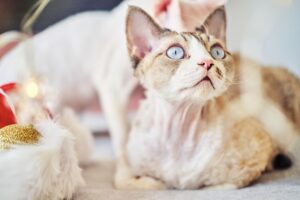
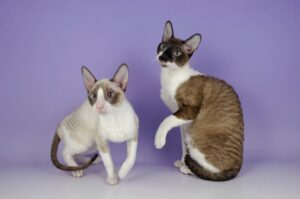
Rex cats are among the most distinctive breeds in the feline world, known for their unique curly coats and playful personalities. Their journey from rare genetic anomalies to beloved household pets is as fascinating as their physical appearance. Here’s a dive into the history of Rex cats, from their origins to the modern-day breeds we know and love.
1. The Beginnings: The First Rex Mutation in England
The story of Rex cats begins in 1950s England with the discovery of the Cornish Rex, the first of the Rex breeds. This breed owes its origin to a genetic mutation in a litter of barn kittens born on a farm in Cornwall.
- The Discovery: In 1950, a curly-coated kitten named Kallibunker was born on Nina Ennismore’s farm in Cornwall. His distinctive wavy coat caught her attention, sparking interest in this genetic anomaly.
- Genetic Mutation: Kallibunker’s unusual coat was the result of a natural genetic mutation, later identified as a recessive gene. When Nina bred Kallibunker with his mother to see if the trait would continue, more curly-coated kittens were born, establishing the foundation of the Cornish Rex breed.
- Naming the Breed: The breed was named “Rex” after the genetic trait and in reference to the curly-coated Rex rabbit, another animal known for its unique fur.
This serendipitous mutation laid the groundwork for the first official Rex cat breed and paved the way for further discoveries.
2. The Rise of the Devon Rex: A Separate Mutation in Devonshire
While the Cornish Rex was gaining recognition, another mutation appeared in a separate part of England, leading to the birth of the Devon Rex. Though it shared the curly coat, this breed had distinct characteristics and a different genetic mutation.
- Kirlee’s Story: In 1960, a wavy-coated kitten named Kirlee was discovered in Devon by Miss Beryl Cox. He bore an uncanny resemblance to the Cornish Rex, but breeders quickly realised that Kirlee’s curls came from a different gene.
- Breeding Challenges: When Kirlee was bred with Cornish Rex cats, the offspring had straight coats, revealing that the Devon Rex’s curly coat was caused by a different genetic mutation. This discovery marked the start of a separate lineage for Devon Rex cats.
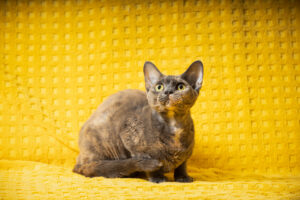
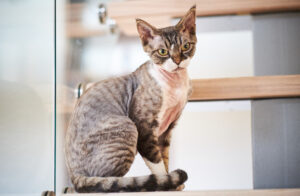
- Unique Characteristics: The Devon Rex developed its own distinctive look, with a shorter, curly coat, prominent cheekbones, and a pixie-like expression that distinguished it from the Cornish Rex.
The Devon Rex gained its own recognition and is celebrated today as a playful, people-loving breed with a charm all its own.
3. International Interest and the Development of Other Rex Breeds
The discovery of curly-coated cats sparked global interest, and soon breeders across Europe and the United States began to explore and develop more Rex breeds. Genetic mutations and intentional breeding led to the emergence of other distinctive curly-coated cats.
- Selkirk Rex: The Selkirk Rex originated in the United States in 1987. A kitten with a plush, curly coat was discovered in a Montana shelter and was later bred to create the Selkirk Rex line. This breed differs from the Cornish and Devon Rex with its plush, dense curls and a genetic mutation unique to the breed.
- German Rex: The German Rex is another curly-coated breed that emerged in the 1940s in East Prussia (now part of Poland). This breed was further developed in Germany, becoming distinct with a soft, velvety coat.
- LaPerm: The LaPerm breed originated from a spontaneous mutation in a barn cat in Oregon, USA, in the early 1980s. Known for its loose, wavy curls, the LaPerm has a different texture and appearance from the other Rex breeds.
Each of these breeds showcases unique coat textures, body types, and personalities, all while sharing the Rex family’s characteristic curly coat.
4. The Spread and Popularity of Rex Cats
Rex cats quickly became popular worldwide due to their distinctive appearance and friendly, outgoing nature. The Cornish and Devon Rex, in particular, gained a strong following and were soon recognised by major cat registries.
- GCCF and CFA Recognition: The Cornish Rex and Devon Rex were officially recognised by major organisations such as the Governing Council of the Cat Fancy (GCCF) and the Cat Fanciers’ Association (CFA) in the 1960s and 1970s, cementing their status as recognised breeds.
- Popularity as Pets: Rex cats’ playful personalities, combined with their unique appearance, made them highly sought-after pets. Their low-shedding coats and affectionate nature have added to their popularity among families, singles, and seniors alike.
- Influence on Modern Breeds: Today, Rex cats continue to influence the development of other breeds, and their genetic lines contribute to studies on feline genetics, coat types, and health.
Rex cats’ popularity shows no signs of slowing down, and their unique qualities continue to capture the hearts of cat lovers globally.
5. Rex Cats Today: Beloved Pets and Show Stars
Today’s Rex cats have come a long way from their origins, with breeders focusing on health, personality, and coat quality to produce well-rounded, healthy cats that embody the unique characteristics of the Rex lineage.
- Cornish and Devon Rex: The Cornish and Devon Rex remain the most popular Rex breeds, known for their lively, affectionate natures and distinct looks. They’re frequent winners at cat shows and beloved as family pets.
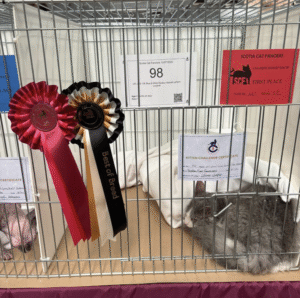
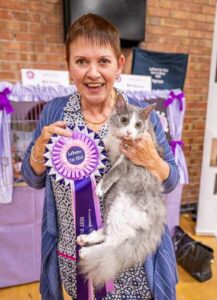
- Show Stars: Rex cats are show favourites, admired for their eye-catching coats and charming personalities. Their presence at shows worldwide continues to draw interest, ensuring they remain popular among breeders and cat lovers alike.
- Adaptable and Affectionate: Modern Rex cats are known not just for their looks but also for their people-oriented, adaptable natures. They’re well-suited for both family life and quieter homes, making them highly versatile pets.
Whether you’re drawn to their playful spirit, their intelligence, or simply the charm of their curly coats, Rex cats have truly earned their place as one of the most unique and endearing breeds in the feline world.
The history of Rex cats is a tale of genetic discoveries, breeding challenges, and ultimately, a celebration of uniqueness. These captivating, curly-coated cats continue to thrive as pets, show stars, and beloved members of families worldwide. From their humble beginnings to their prominent place in the world of cat fancy, Rex cats have undoubtedly left a lasting legacy in feline history.